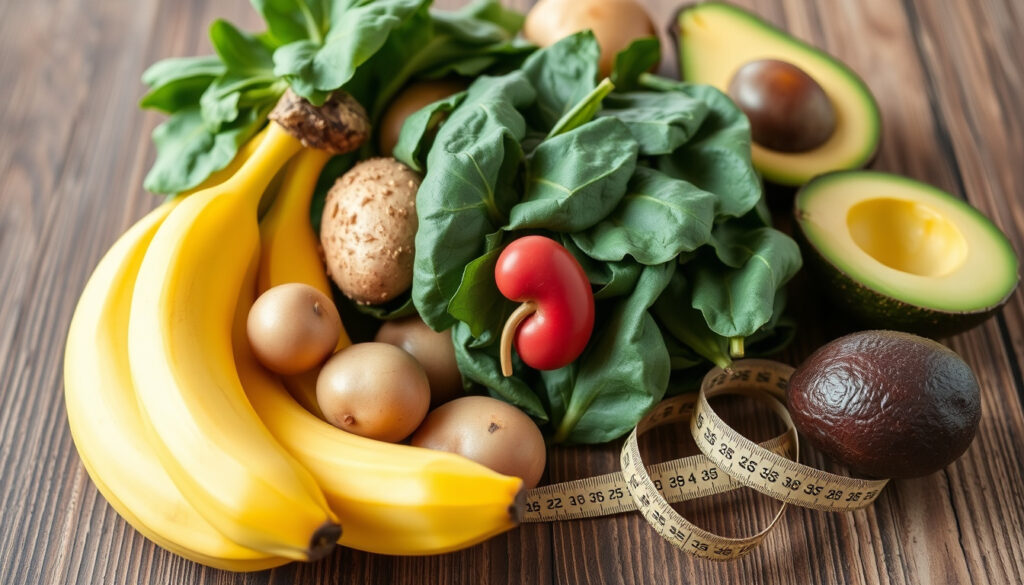
High Potassium Foods to Avoid: A Complete Guide for Kidney Health
Many people reach for an avocado or a banana thinking they’re making a healthy choice. But for the millions of Americans living with chronic kidney disease (CKD), these everyday foods can pose a serious risk because of their potassium content.
Daily potassium limit (CKD): 1500–2000 mg per day (National Kidney Foundation) ·
Medium banana: 422 mg potassium ·
Half avocado: 487 mg potassium ·
US adults with CKD: Over 37 million
Quick snapshot
- Boiling reduces potassium in potatoes and some vegetables (National Kidney Foundation)
- Dried fruits are concentrated sources of potassium (Medical News Today)
- Salt substitutes with potassium chloride are unsafe for kidney patients (Kidney Care UK)
- Whether natural diuretics like dandelion tea are effective for lowering potassium (WebMD)
- Exact potassium reduction from different cooking methods for all foods (Fresenius Kidney Care)
- Potassium levels can rise quickly after a high-potassium meal; symptoms may appear within hours (PMC review)
- Regular blood tests (monthly or quarterly) are recommended for CKD patients (National Kidney Foundation)
- Consult a renal dietitian to create a personalized low-potassium meal plan (North Bristol NHS Trust)
- Monitor potassium levels through routine lab work (National Kidney Foundation)
The table below shows how quickly common foods exceed the safe threshold for CKD patients.
| Food / Measure | Potassium content | Source |
|---|---|---|
| 1 cup cooked spinach | 839 mg | WebMD |
| Whole avocado (medium) | ~975 mg | Medical News Today |
| Medium banana | 422 mg | National Kidney Foundation |
| Half avocado | 487 mg | Fresenius Kidney Care |
| 1 cup baked beans (canned) | ~350 mg | WebMD |
| 1 cup cooked lentils | 731 mg | Fresenius Kidney Care |
| 1 oz almonds (about 23 nuts) | ~200 mg | PMC review |
| 1 cup cooked Swiss chard | ~960 mg | Medical News Today |
What are the worst foods for potassium?
Some foods are so dense in potassium that they can push a CKD patient over the daily limit in one sitting. The National Kidney Foundation (leading US kidney health organization) defines high-potassium as 200 mg or more per serving. Here are the top offenders:
- Dried fruits – Raisins, dates, dried figs (extremely concentrated). Medical News Today notes that dried fruits pack more potassium per gram than fresh.
- Avocados – Half an avocado contains 487 mg. The National Kidney Foundation advises avoiding guacamole entirely. Source
- Potatoes and sweet potatoes – A medium baked potato has about 926 mg. Boiling leaches some potassium, but fries and chips remain high. WebMD
- Tomato products – Tomato sauce, paste, juice are concentrated. One cup of tomato sauce can exceed 800 mg. Fresenius Kidney Care
- Beans and lentils – Kidney beans, pinto beans, lentils are high. A half-cup of cooked lentils has about 365 mg. PMC review
- Nuts and seeds – Almonds, pistachios, sunflower seeds contribute significant potassium. WebMD
- Spinach and Swiss chard – Cooked greens are extremely dense: one cup cooked spinach has 839 mg. Medical News Today
These foods are nutrient-dense for healthy people but become dangerous for CKD patients. Avoiding them means swapping for low-potassium alternatives like apples, berries, and white rice.
The pattern is clear: raw plant foods that are “healthy” for the general population often top the potassium charts. For someone with compromised kidneys, the upside of fiber and vitamins is outweighed by the risk of hyperkalemia.
What are the 10 highest potassium foods?
Based on data from Fresenius Kidney Care and WebMD, here are ten foods with the highest potassium per standard serving:
- Swiss chard (cooked, 1 cup) – 960 mg
- Avocado (whole) – 975 mg
- Spinach (cooked, 1 cup) – 839 mg
- Tomato sauce (1 cup) – ~800 mg
- Lentils (cooked, 1 cup) – 731 mg
- Beet greens (cooked, 1 cup) – 1,309 mg (but rarely eaten in large amounts)
- Potato (medium baked) – 926 mg
- Banana (medium) – 422 mg
- Dried apricots (1/2 cup) – ~1,100 mg
- White beans (canned, 1 cup) – 1,189 mg
Numbers from FDA standard serving sizes, compiled by Medical News Today and PMC review.
What is the best thing to eat to lower your potassium?
Lowering potassium isn’t about eating a magic food – it’s about choosing low-potassium alternatives and using smart cooking methods. The North Bristol NHS Trust (UK kidney dietitian service) recommends building meals around these low-potassium picks:
What to eat if you have high potassium?
- Fruits: Apples, berries (strawberries, blueberries), grapes, pineapple, watermelon (limited due to water content). National Kidney Foundation
- Vegetables: Cauliflower, cucumber, lettuce, zucchini, peppers, onions (all low in potassium). WebMD
- Grains: White rice, pasta, bread, cereals (not bran or whole-grain). Fresenius Kidney Care
- Proteins: Chicken (small portions), fish (limited), eggs. PMC review
- Boiling technique: Boiling vegetables like potatoes, carrots, and greens can reduce potassium by up to 50%. Discard the water. National Kidney Foundation
For CKD patients, the plate should shift from plant-heavy to starch-and-protein heavy. White rice + boiled chicken + steamed cauliflower is a safe template.
The implication: you don’t have to starve – you just have to swap. Instead of a baked potato, have white rice. Instead of tomato sauce, use olive oil and lemon juice. Small changes prevent large potassium spikes.
How do you flush potassium out of your body naturally?
When potassium levels climb, the body needs help eliminating it. The primary route is through urine, so kidney function is key. National Kidney Foundation stresses that the first step is diet – stopping the intake of high-potassium foods.
What cancels out high potassium?
- Adequate water intake – if the kidneys can handle it, drinking enough water helps flush potassium. Medical News Today
- Prescription diuretics – “water pills” like furosemide lower potassium by increasing urine output. PMC review
- Avoid salt substitutes – many contain potassium chloride. Kidney Care UK (UK kidney patient advocacy) warns: “Avoid any salt substitutes which list potassium chloride on the ingredients list.”
- Natural diuretics – parsley, dandelion tea, green tea have limited evidence. WebMD notes that clinical data is insufficient to recommend them reliably.
- Medication adjustments – some blood pressure drugs (ACE inhibitors, ARBs) raise potassium; a doctor may adjust them. National Kidney Foundation
Natural diuretics are not a substitute for medical treatment. A patient with advanced CKD may need dialysis to remove excess potassium – no tea can replace that.
What this means: “flushing” is mainly about supporting kidney function, not a DIY detox. The safest play is diet control and prescribed medications.
Are baked beans high in potassium?
Yes, baked beans are considered high-potassium. A half-cup serving of canned baked beans typically contains 300–400 mg of potassium – about one-fifth of the daily limit for CKD patients. WebMD includes them on the avoid list. Canned varieties often have added potassium from preservatives. Fresenius Kidney Care recommends limiting or avoiding them. If you still want beans, choose fresh or dried and cook them from scratch, then discard the water – but even then, portion control is essential.
The trade-off: beans are excellent for heart health, but for a kidney patient, the potassium load is too high. Swap for green beans or wax beans, which are lower in potassium.
Practical Steps to Lower Your Potassium Levels
- Get a dietary consult – Work with a renal dietitian to get a personalized plan. North Bristol NHS Trust
- Read labels – Look for potassium content. Anything over 200 mg per serving is high. National Kidney Foundation
- Boil vegetables – Especially potatoes, carrots, and greens. Discard the cooking water. National Kidney Foundation
- Avoid canned goods in liquid – The liquid from canned fruits and vegetables is potassium-rich. National Kidney Foundation
- Limit high-potassium fruits – Avoid bananas, oranges, cantaloupe, kiwi, mango, dried fruits. WebMD
- Choose low-potassium grains – White rice, pasta, bread (not whole grain or bran). Fresenius Kidney Care
- Monitor blood potassium regularly – Follow your doctor’s schedule for lab tests. PMC review
- Check medications – Some supplements and meds (NSAIDs, ACE inhibitors) can raise potassium. National Kidney Foundation
These steps give CKD patients a clear playbook for keeping potassium in a safe range while still eating satisfying meals.
For a deeper look at mineral-rich foods, see our guide on What Foods Are High in Iron? And if you’re a potato lover, our Potato Bacon Soup Recipe includes boiling tips that can help reduce potassium.
What We Know and What’s Unclear
Confirmed facts
- Boiling reduces potassium in potatoes and some vegetables (National Kidney Foundation).
- Dried fruits are concentrated sources of potassium (Medical News Today).
- Salt substitutes with potassium chloride are unsafe for kidney patients (Kidney Care UK).
- High-potassium foods have ≥200 mg per serving (National Kidney Foundation).
What’s unclear
- Whether natural diuretics like dandelion tea are effective for lowering potassium (WebMD).
- Exact potassium reduction from different cooking methods for all foods (Fresenius Kidney Care).
- Whether very small portions of high-potassium foods are safe (PMC review).
The evidence is clear on the dangers of high-potassium foods for CKD patients, but gaps remain in understanding how much potassium cooking methods remove across different food types.
Expert Perspectives
“Avoid guacamole. It is made from avocados, which are high in potassium.”
National Kidney Foundation (leading US kidney health organization)
“Avoid any salt substitutes which list potassium chloride on the ingredients list.”
“Those fruit and vegetables that are very high in potassium should be avoided or used in very small quantities.”
NHS North Bristol Trust (UK National Health Service renal dietitian service)
For CKD patients in the US and UK, the choice is clear: work with a dietitian, keep potassium within safe limits, or risk dangerous hyperkalemia. The consequences of ignoring potassium levels – cardiac arrhythmia, muscle weakness, even sudden cardiac arrest – are too severe to gamble.
Frequently asked questions
Can I eat watermelon on a low-potassium diet?
Yes, watermelon is relatively low in potassium (about 170 mg per cup). However, its high water content can be an issue for people on fluid restrictions. WebMD lists it as acceptable in small amounts.
Is coconut water high in potassium?
Yes, coconut water is very high – about 600 mg per cup. Fresenius Kidney Care includes it on the high-potassium fluids list.
What are the best low-potassium snacks?
Apples, grapes, popcorn (plain), crackers, rice cakes, and unsalted pretzels are good choices. National Kidney Foundation
How often should I check my potassium levels?
Most CKD patients need blood tests every 1–3 months, or more frequently if potassium is unstable. PMC review
Does cooking reduce potassium in all vegetables?
Boiling leaches potassium into the water, especially for potatoes and leafy greens. Roasting, baking, or frying does not reduce potassium significantly. National Kidney Foundation
Is chocolate high in potassium?
Dark chocolate and milk chocolate contain moderate amounts. One ounce of dark chocolate has about 100 mg. WebMD recommends limiting chocolate.
Can I eat nuts if I have high potassium?
Nuts are moderately high. A small handful (1 oz) contains 150–200 mg. Fresenius Kidney Care advises limiting them or choosing lower-potassium nuts like pecans and macadamia nuts.
What is hyperkalemia and why is it dangerous?
Hyperkalemia is high potassium in the blood (above 5.5 mmol/L). It can cause muscle weakness, heart palpitations, and cardiac arrest. National Kidney Foundation
More related posts
 Michael Cooper Jr.: Actor Age Height Family Forever Role
 Millennial Generation Age Range and Key Facts 2026
 CRA 2026 Tax Season Changes: Filing Guide & Updates
 Son Ye-jin: Biography, Husband, Baby, Net Worth, FAQs
 Brandi Carlile: Biography, Family, and LGBTQ+ Advocacy
 Drew Doughty: teeth, injury, Stanley Cups, contract
 C to F Conversion: Easy Formula, Mental Trick & Chart
 Ice‑T: Real Name, Net Worth, Health, Family, and Career