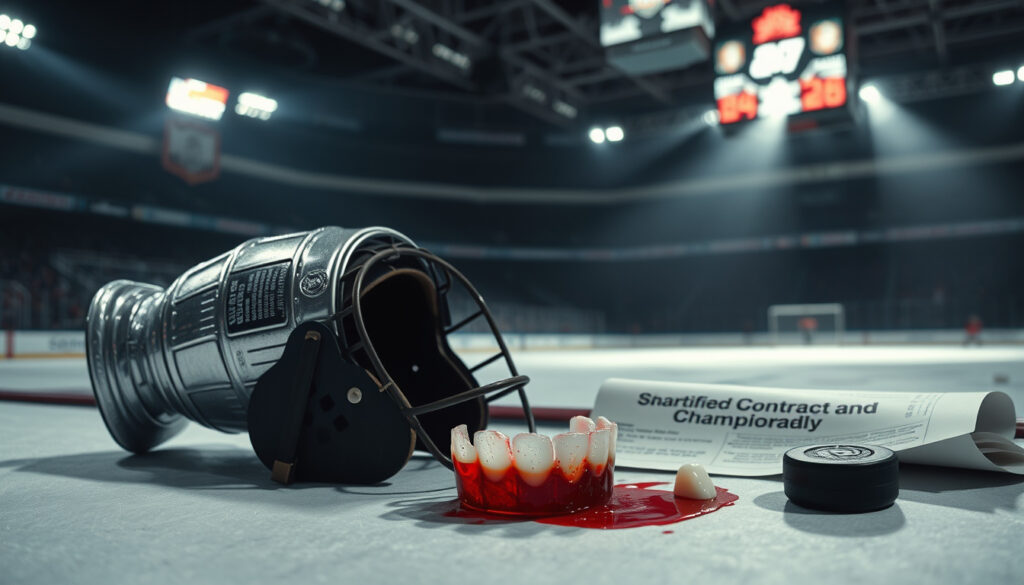
Drew Doughty: teeth, injury, Stanley Cups, contract
Drew Doughty’s gap-toothed grin is as recognizable as his skating, but the Los Angeles Kings defenceman is now navigating the most uncertain stretch of his career. A lower-body injury has sidelined him, raising questions about his future with the only franchise he has ever played for.
Position: Defence ·
Team: Los Angeles Kings ·
Stanley Cups: 2 (2012, 2014) ·
Draft: 2nd overall, 2008 ·
Contract: 8 years, $88 million
Quick snapshot
- Drew Doughty is a defenceman and alternate captain for the Los Angeles Kings (NHL.com — official player profile)
- He won the Stanley Cup twice (2012 and 2014) with the Kings (NHL.com — Kings player page)
- Drafted second overall in the 2008 NHL Draft (Elite Prospects — scouting database)
- Signed an eight-year, $88 million extension in 2018 (NHL.com News — contract report)
- Missed 47 games in 2024‑25 due to a broken ankle suffered in preseason (NHL.com News — injury update)
- Made his season debut on January 29, 2025 against the Florida Panthers (NHL.com — Kings player page)
- Exact return date from his current lower‑body injury (LA Kings Insider — exit interview notes)
- Whether Doughty will retire as a King after his contract ends (NHL.com News — Doughty’s desire to stay)
- If the broken ankle will affect his long‑term mobility (NHL.com News — injury detail)
- 2008 – Drafted 2nd overall by Los Angeles (Elite Prospects)
- 2012 – First Stanley Cup (NHL.com)
- 2014 – Second Stanley Cup + Olympic gold (NHL.com)
- 2016 – Norris Trophy winner (Wikipedia — awards list)
- 2018 – Signed $88M extension (NHL.com News)
- 2025 – Returned from broken ankle, then new lower‑body injury (NHL.com)
- Recovery timeline for lower‑body injury is week‑to‑week (NHL.com News — status report)
- Doughty has one season left on his contract (2026‑27) (NHL.com News — contract details)
- Extension talks have not begun — Doughty said “there’s been absolutely no conversation about it” (LA Kings Insider — exit interview)
Seven key figures that define Drew Doughty’s career:
| Attribute | Value |
|---|---|
| Full Name | Drew Doughty |
| Born | December 8, 1989 (Wikipedia — biography) |
| Birthplace | London, Ontario, Canada |
| Height | 6’1″ |
| Weight | 210 lbs |
| Drafted | 2nd overall, 2008 by Los Angeles Kings (Elite Prospects — draft entry) |
| Contract | 8 years, $88 million (cap hit $11M) (NHL.com News — extension) |
The table above distills Doughty’s career into seven defining data points, from his London, Ontario roots to the $88 million contract that anchors the Kings’ cap sheet.
What happened to Drew Doughty’s teeth?
Drew Doughty lost teeth after being hit by a high stick during a game, a moment that became part of hockey lore. The gap is so recognizable that fans often bring signs about his missing teeth to Kings games. Tooth loss is common among NHL players because of high‑speed impacts — sticks, pucks, and the boards all take their toll (Wikipedia — general hockey culture). Several players have notable missing teeth, but Doughty’s gap is arguably the most famous in the league today.
How common is tooth loss in the NHL?
- Tooth loss is routine — many players lose multiple teeth during their careers, often without missing a shift (Elite Prospects — player profile notes).
- Doughty himself has joked about it, saying it comes with the territory.
Who has the most missing teeth in the NHL?
While no official tally exists, players like Rick Tocchet and Bobby Clarke famously played with few teeth. Doughty’s gap is among the most photographed, but the crown for most missing likely belongs to enforcers from earlier eras (Wikipedia — historical context).
The implication: Doughty’s gap is a talking point precisely because he is a superstar; for less‑known players, missing teeth rarely get attention.
Has Drew Doughty ever won a Stanley Cup?
Yes, twice. Doughty helped the Los Angeles Kings capture the Stanley Cup in 2012 and again in 2014 (NHL.com — Kings player page). He was a driving force on the blue line, especially in 2012 when he led all defencemen in playoff scoring with 16 points in 20 games (Wikipedia — playoff stats). He also won Olympic gold with Team Canada in 2010 and 2014 (Wikipedia — international medals).
How many Stanley Cups has Drew Doughty won?
- Two: 2012 over New Jersey Devils, 2014 over New York Rangers (NHL.com).
- Doughty became the first Kings defenceman to win the Norris Trophy (2016) after those Cups (Wikipedia — Norris Trophy).
The pattern: Doughty’s prime coincided exactly with the Kings’ championship window. He was not just along for the ride — he was the engine.
What is Drew Doughty’s injury?
Doughty missed the first 47 games of the 2024‑25 season after breaking his ankle in a preseason game (NHL.com News — broken ankle). He returned on January 29, 2025, and registered 17 points in 30 games (NHL.com — season stats). As of early 2025, he is dealing with a lower‑body injury that is described as week‑to‑week (NHL.com News — injury status).
Doughty has now missed significant time in consecutive seasons. At 35, each new injury carries more weight for the Kings’ cap structure and playoff hopes.
When will Drew Doughty return from injury?
The Kings have not issued a firm timeline. Coach Jim Hiller has said the team is taking a cautious approach, but no official date has been announced (LA Kings Insider — exit interview notes).
The trade‑off: Rushing Doughty back risks re‑injury; sitting him too long hurts the Kings’ playoff push. The team needs him healthy for a potential postseason run.
What number does Drew Doughty wear?
Doughty wears number 8 for the Los Angeles Kings (NHL.com — player profile). He has worn that number throughout his entire NHL career, and also sported it for Team Canada at the Olympics.
Why does Drew Doughty wear number 8?
Doughty has not given a detailed reason publicly, but many players stick with the number they had in junior hockey. He wore 8 with the Guelph Storm of the OHL and kept it after being drafted (Elite Prospects — junior stats).
Is number 69 banned in the NHL?
Number 69 is not officially banned by NHL rule, but league policy discourages its use due to the mature connotation. No player has been permitted to wear 69 in a regular‑season game (Wikipedia — inactive NHL numbers).
The catch: While 69 is unofficially off limits, numbers like 00 and 99 (Gretzky) are retired league‑wide. Doughty’s 8 is safe, and likely will hang in the rafters one day.
What is Drew Doughty’s salary?
Doughty signed an eight‑year, $88 million contract extension with the Kings on July 1, 2018 (NHL.com News — extension announcement). The annual cap hit is $11 million, making him one of the highest‑paid defensemen in the league (CapWages — contract details).
How long is Drew Doughty’s contract?
The extension runs through the 2026‑27 season (NHL.com — player contract). He will be 37 when it expires. Doughty has said he wants to finish his career in Los Angeles, but as of April 2026 no extension talks had begun (LA Kings Insider — exit interview).
The pattern: Doughty’s current contract already covers his age‑35 to age‑37 seasons. If the Kings offer another deal, it will almost certainly be at a lower AAV to manage the cap.
Timeline of Drew Doughty’s career
- 2008: Drafted 2nd overall by Los Angeles Kings (Elite Prospects)
- 2012: Won first Stanley Cup with Kings (NHL.com)
- 2014: Won second Stanley Cup; Olympic gold in Sochi (NHL.com)
- 2016: Won Norris Trophy as top defenceman (Wikipedia)
- 2018: Signed 8‑year, $88M contract extension (NHL.com News)
- 2022: Played 1,000th NHL game (Wikipedia)
- 2024: Broke ankle in preseason, missed 47 games (NHL.com News)
- 2025: Returned January 29; later placed week‑to‑week with lower‑body injury (NHL.com)
Clarity check
Confirmed facts
- Doughty is a Kings defenceman and alternate captain (NHL.com)
- He won Stanley Cups in 2012 and 2014 (NHL.com)
- He signed an $88M contract in 2018 (NHL.com News)
- He missed 47 games in 2024‑25 due to a broken ankle (NHL.com News)
What’s unclear
- Exact return date from lower‑body injury
- Whether Doughty will sign another contract after 2026‑27
- If the broken ankle will have lasting effects
“I want to stay in L.A. for the rest of my career until I retire.”
— Drew Doughty, NHL.com News
“There’s been absolutely no conversation about it.” — Doughty on extension talks heading into the final year of his contract.
— Drew Doughty, LA Kings Insider
For Doughty, the next 12 months will define the final chapter of his career. The Kings invested $88 million in a player they believed would anchor their blue line through a decade. Two rings, a Norris, and 1,000 games later, that bet has paid off. But with two significant injuries in two years and an expiring contract, the trade‑off is now urgent: push for one more Cup while Doughty is still healthy, or begin planning for life after No. 8. For Kings management, the decision is clear: maximize the window, because windows in the NHL close faster than anyone expects.
puckpedia.com, sportsforecaster.com, reddit.com, rinkroyalty.com, sports.yahoo.com, espn.com
For a closer look at the story behind his gap-toothed smile and championship pedigree, check out Drew Doughtys legacy and missing teeth.
Frequently asked questions
How tall is Drew Doughty?
He is listed at 6’1″ (185 cm) on the official Kings roster (NHL.com).
When was Drew Doughty born?
December 8, 1989, in London, Ontario (Wikipedia).
What is Drew Doughty’s net worth?
Exact net worth is not publicly disclosed, but his career earnings from NHL contracts exceed $120 million, including his entry‑level deal, the 2011 extension, and the 2018 extension (CapWages).
Does Drew Doughty have a family?
He is married to Taylor Doughty, and they have two children (Wikipedia).
What awards has Drew Doughty won besides Stanley Cups?
Norris Trophy (2016), Olympic gold medals (2010, 2014), and four NHL All‑Star selections (NHL.com).
Is Drew Doughty married?
Yes, to Taylor Doughty (Wikipedia).
What is Drew Doughty’s role on the Kings?
He is the top‑pairing right‑handed defenceman and an alternate captain, responsible for quarterbacking the power play and logging heavy minutes against opponents’ top lines (NHL.com).
More related posts
 Tony Parker: Rings, Divorce, Net Worth & Life After NBA (2025)
 Larry Page: Co-Founder of Google, Net Worth, and Biography
 Storm Reid: Why She Left Euphoria, Relationship, Career
 The Secret Lives of Mormon Wives: Seasons, Cast & Scandal Explained
 Amazon Prime Free Trial: How to Get Your 30 Days Free
 Tran late Ru ian to Engli h: Be t Free Tool Compared
 Best Whole Home Water Filtration Systems – 2025 Lab-Tested Picks
 Cito Gaston: Biography, World Series Wins, and Life Now