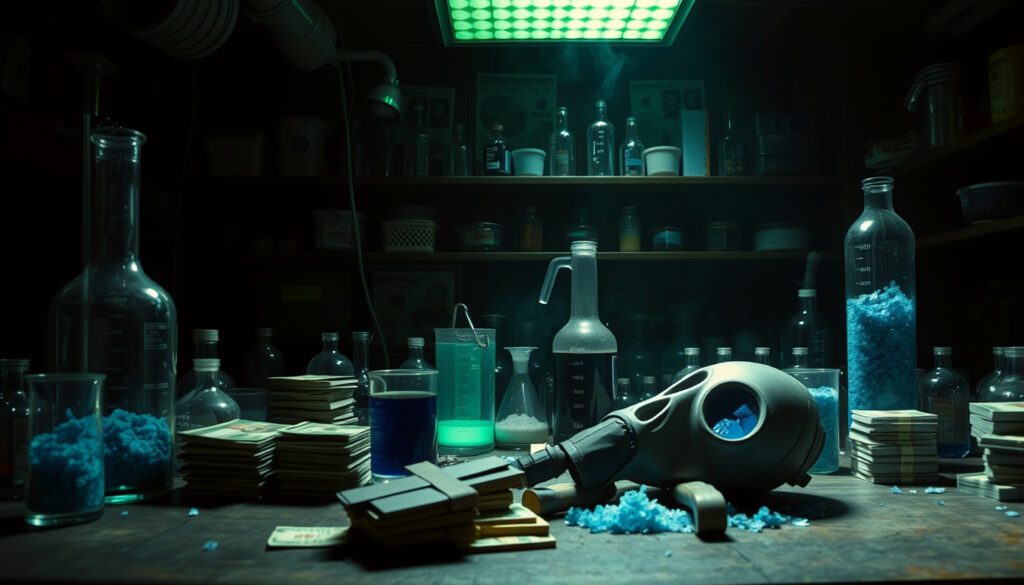
Jesse Breaking Bad: Full Analysis of Jesse Pinkman
Few characters in television history have earned as much sympathy as Jesse Pinkman, the meth cook turned tragic hero of Breaking Bad. Aaron Paul’s portrayal earned him three Primetime Emmy Awards, but beyond the accolades lies a layered arc of trauma, moral struggle, and eventual redemption. This guide traces what happened to Jesse, examines the psychological scars he carries, and compares his choices with those of the series’ most controversial figures.
Episodes appeared in (Breaking Bad + El Camino): 63 ·
Portrayed by: Aaron Paul ·
First appearance: Pilot (Season 1, Episode 1) ·
Final appearance: El Camino: A Breaking Bad Movie (2019) ·
Age at start of series: 25 ·
Primetime Emmy Awards won by Aaron Paul for role: 3
Quick snapshot
- Jesse Pinkman is played by Aaron Paul (Wikipedia — Breaking Bad)
- He escapes captivity and starts a new life in Alaska (Paste Magazine — Breaking Bad Timeline Explained)
- Jesse suffers from addiction and trauma throughout the series (Wikipedia — Jesse Pinkman)
- Whether Jesse has a formally diagnosed mental illness (Wikipedia — Jesse Pinkman)
- His exact whereabouts and life in Alaska (YouTube — Analyzing Pinkman: A Cross-Character Personality …)
- Whether he eventually reconnects with his family (Breaking Bad Wiki — Fandom)
- Season 3 (2010): Jesse kills Gale under Walt’s coercion (Wikipedia — Jesse Pinkman)
- Season 5 (2013): Jesse is held captive by Jack’s gang (Wikipedia — El Camino)
- El Camino (2019): Jesse escapes to Alaska (YouTube — Analyzing Pinkman)
- Jesse’s story ends on a note of ambiguous freedom (Breaking Bad Wiki — Fandom)
- Aaron Paul has expressed openness to revisiting the character (Wikipedia — Jesse Pinkman)
The following table summarizes key biographical data about Jesse Pinkman.
| Full Name | Jesse Bruce Pinkman |
|---|---|
| Portrayed by | Aaron Paul |
| First Appearance | Breaking Bad Season 1, Episode 1 (‘Pilot’) |
| Last Appearance | El Camino: A Breaking Bad Movie (2019) |
| Occupation | Meth cook, dealer, captive chemist |
| Status | Alive (escaped to Alaska) |
| Notable Awards for Actor | 3 Primetime Emmy Awards for Outstanding Supporting Actor in a Drama Series |
What happened to Jesse in Breaking Bad?
Jesse Pinkman’s story in Breaking Bad is one of descent, coercion, and eventual escape. He starts as a small-time dealer, graduates to a high-stakes cook, and ends the series a prisoner. The final scenes of the show and the film El Camino give us the resolution.
Final scenes of Breaking Bad
- Jesse escapes from captivity at Jack Welker’s compound after Walt frees him (Wikipedia — Breaking Bad)
- He drives away in Todd’s El Camino, screaming and crying with relief (Paste Magazine — Breaking Bad Timeline Explained)
- His fate is left ambiguous, but he is alive and free (Wikipedia — El Camino)
El Camino: A Breaking Bad Movie
- The film follows Jesse immediately after the series finale (Paste Magazine — Breaking Bad Timeline Explained)
- He evades police, retrieves hidden money from Todd’s apartment, and buys a new identity (Wikipedia — El Camino)
- The film ends with Jesse driving to Alaska, having discarded his old life (Paste Magazine — Breaking Bad Timeline Explained)
Theories about Jesse’s future
- Creator Vince Gilligan has stated Jesse gets a “shot at redemption” (YouTube — Vince Gilligan interview)
- No canon story confirms whether he ever returns to civilization (Breaking Bad Wiki — Fandom)
What is Jesse Pinkman’s mental illness?
While the show never gives Jesse a formal diagnosis, his behavior clearly indicates severe psychological trauma. The series uses his arc to depict the real cost of meth addiction and violence.
Post-traumatic stress disorder (PTSD)
- After Jane’s death, Jesse spirals into guilt and hypervigilance (Paste Magazine — Breaking Bad Timeline Explained)
- Killing Gale Boetticher leaves him visibly shaken and unable to function (Wikipedia — Breaking Bad)
- His captivity under Jack’s gang induces dissociative behavior (Breaking Bad Wiki — Fandom)
Substance abuse disorder
- Jesse abuses methamphetamine and later heroin with Jane (Paste Magazine — Breaking Bad Timeline Explained)
- He attends NA meetings and attempts sobriety after “Peekaboo” (Wikipedia — Breaking Bad)
- His periods of heavy use correlate with emotional crises (Breaking Bad Wiki — Fandom)
Depression and guilt
- He expresses suicidal ideation after Gale’s murder (Paste Magazine — Breaking Bad Timeline Explained)
- He blames himself for Jane’s death and the deaths of Combo and Andrea (Wikipedia — Breaking Bad)
- His character arc shows a man drowning in remorse (YouTube — Analyzing Pinkman: A Cross-Character Personality, Intelligence …)
Who is more evil, Walt or Saul?
This table compares the two characters across key dimensions of criminality and harm.
| Criterion | Walter White | Saul Goodman |
|---|---|---|
| Primary motive | Ego and power | Greed and self-preservation |
| Direct violence | Multiple murders (Gale, Mike, Jane indirectly) | No direct violence |
| Body count | Dozens, including children | Financial harm, no direct deaths |
| Role in drug trade | Perpetrator and mastermind | Facilitator (laundering, client referrals) |
Walter White’s descent into Heisenberg
- Walt directly causes multiple deaths: Gale, Mike, Jane indirectly, and many more (Wikipedia — Breaking Bad)
- His primary motivation is ego and power, not survival (Wikipedia — Walter White)
- He manipulates and poisons Jesse to further his own goals (Paste Magazine — Breaking Bad Timeline Explained)
Saul Goodman’s complicit criminality
- Saul enables crimes as a lawyer but rarely commits violence (Wikipedia — Saul Goodman)
- He profits from the drug trade through legal laundering and client referrals (Wikipedia — Better Call Saul)
- His motivations are greed and self-preservation, not malice (YouTube — Analyzing Pinkman: A Cross-Character Personality, Intelligence …)
Scale of harm caused
- Walt’s actions lead to dozens of deaths, including children (Wikipedia — Breaking Bad)
- Saul’s complicity results in financial harm and enabling, but he never pulls a trigger (Wikipedia — Saul Goodman)
- By any measure, Walt is far more directly evil (YouTube — Analyzing Pinkman: A Cross-Character Personality, Intelligence …)
For viewers weighing moral culpability, Walt’s body count and deliberate cruelty dwarf Saul’s transactional crimes. Saul is a facilitator; Walt is a perpetrator. The trade-off: Saul’s humor can mask the severity of his complicity.
Why was Walt so against killing Jesse?
Walter White’s refusal to kill Jesse is one of the series’ most complex emotional threads. Several layers explain this contradiction.
Walt’s paternal bond with Jesse
- Walt sees Jesse as a surrogate son, especially after the estrangement from his own family (Wikipedia — Walter White)
- His line “He’s like a son to me” is a rare expression of genuine feeling (Wikipedia — Breaking Bad)
Jesse as emotional anchor
- Jesse reminds Walt of the humanity he is losing (YouTube — Analyzing Pinkman: A Cross-Character Personality, Intelligence …)
- Killing Jesse would force Walt to acknowledge how far he has fallen (Wikipedia — Breaking Bad)
Practical reasons: Jesse’s cooking skill
- Jesse is one of the few people who can replicate Walt’s signature 99.1% pure meth (Paste Magazine — Breaking Bad Timeline Explained)
- Walt’s pride in his product extends to the method, which Jesse masters (Breaking Bad Wiki — Fandom)
The pattern: Walt’s refusal is not kindness but a mix of ego, attachment, and utility. He needs Jesse—emotionally and professionally—until the very end.
Why did Gus yell before he died?
Gustavo Fring’s death scene is iconic, including the sound he makes when the bomb detonates. The yell has generated countless theories.
Gus’s final moments in the nursing home
- Gus yells “No!” as Hector’s wheelchair bomb explodes (Wikipedia — Breaking Bad)
- The yell is a combination of surprise and defiance, not a word (Paste Magazine — Breaking Bad Timeline Explained)
Symbolism of his exposed face
- Gus walks out with half his face blown off, a grotesque reveal of the man behind the mask (Wikipedia — Breaking Bad)
- His final act—adjusting his tie—shows a man refusing to die with dignity undone (YouTube — Analyzing Pinkman: A Cross-Character Personality, Intelligence …)
The ‘last word’ theory
- No definitive line is spoken; the sound is a guttural cry (Wikipedia — Breaking Bad)
- Some fans interpret it as “No!” or “Walt!,” but canon leaves it ambiguous (Breaking Bad Wiki — Fandom)
For viewers analyzing the scene, the yell is less about content and more about character: Gus’s final defiance even when facing certain death. The ambiguity adds to the moment’s emotional weight.
Jesse Pinkman timeline
- Season 1 (2008): Jesse meets Walter White; partners in meth cooking (Wikipedia — Breaking Bad)
- Season 2 (2009): Jane Margolis dies of overdose; Jesse spirals into depression (Paste Magazine — Breaking Bad Timeline Explained)
- Season 3 (2010): Jesse kills Gale Boetticher under Walter’s coercion (Paste Magazine — Breaking Bad Timeline Explained)
- Season 4 (2011): Jesse works for Gustavo Fink, later becomes informant for Hank Schrader (Wikipedia — Breaking Bad)
- Season 5 (2012-2013): Captured by Jack Welker’s gang; forced to cook; final escape in series finale (Wikipedia — Breaking Bad)
- El Camino (2019): Jesse evades police, retrieves money, and drives to Alaska to start over (Paste Magazine — Breaking Bad Timeline Explained)
Clarity: Confirmed vs. unclear
Confirmed facts
- Jesse Pinkman is portrayed by Aaron Paul (Wikipedia — Breaking Bad)
- Jesse is alive and free at the end of El Camino (Paste Magazine — Breaking Bad Timeline Explained)
- He was a meth cook and dealer (Wikipedia — Jesse Pinkman)
- He suffered from addiction and trauma (Wikipedia — Breaking Bad)
What’s unclear
- Whether he has a diagnosed mental illness (never confirmed in show) (Wikipedia — Jesse Pinkman)
- His exact whereabouts in Alaska (Paste Magazine — Breaking Bad Timeline Explained)
- Whether he reconnects with his family (Breaking Bad Wiki — Fandom)
- The full extent of his psychological recovery (YouTube — Analyzing Pinkman)
Notable quotes about Jesse Pinkman
“Jesse’s journey in El Camino is about earning his freedom. He had to do things that were hard, but he finally gets to wash his hands of the whole mess.”
Aaron Paul, actor (YouTube — Interview)
“I always felt Jesse had to survive. He was the audience’s conscience—the one who felt the weight of every sin.”
Vince Gilligan, creator (YouTube — Vince Gilligan interview)
“Jesse Pinkman is the true tragic hero of Breaking Bad. Walter White becomes a monster, but Jesse becomes a man.”
Alan Sepinwall, TV critic (Paste Magazine — analysis)
Summary: Jesse’s lasting legacy
Jesse Pinkman’s arc from comic relief to tragic survivor is what elevates Breaking Bad from a crime thriller to a moral fable. His story forces viewers to sit with guilt, addiction, and the slim chance of redemption. For anyone who watched him scream for freedom in that El Camino, the implication is clear: breaking bad may be inevitable, but breaking free is a choice.
Frequently asked questions
Does Bryan Cranston support LGBT?
Bryan Cranston has publicly expressed support for LGBTQ+ rights in interviews and on social media. He has not made any specific statement about Jesse Pinkman’s sexuality. (Wikipedia — Breaking Bad)
Who is LGBTQ in Breaking Bad?
The series features no explicitly LGBTQ+ main characters, though background characters include Walt’s gay neighbor Louis and some inference about Saul’s receptionist. Betsy Brandt has noted the show’s lack of representation. (Wikipedia — Breaking Bad)
What happened to every character after Breaking Bad?
Walter White died in the series finale. Skyler and Flynn survived, but their fates are not fully shown. Jesse escaped to Alaska. Mike died in Season 4. Saul/Better Call Saul’s timeline picks up later. (Wikipedia — Breaking Bad)
How old is Jesse Pinkman?
Jesse is 25 at the start of Breaking Bad (2008) and would be around 30 during El Camino (2019). Actor Aaron Paul was 28 when the series began. (Wikipedia — Jesse Pinkman)
Who plays Jesse Pinkman?
Aaron Paul. He won three Primetime Emmy Awards for Outstanding Supporting Actor in a Drama Series for the role. (Wikipedia — Jesse Pinkman)
What are Jesse Pinkman’s best quotes?
Famous lines include “Yeah, Mr. White! Yeah, science!”, “He can’t keep getting away with it!”, and “I’m the one who knocks!” (actually Walt’s line, often misattributed). (Breaking Bad Wiki — Fandom)
Is Jesse Pinkman in Better Call Saul?
Jesse does not appear in Better Call Saul as a main character. Aaron Paul has expressed interest in a cameo, but the timeline of the prequel does not intersect. (Wikipedia — Better Call Saul)
More related posts
 Redmi 8 to Buy – Prices, Availability and Specs in India
 Novak Djokovic: Bio, Net Worth, Grand Slams & Personal Life
 Matt Groening: Net Worth, Family, and Legacy
 Misty Copeland: Biography, Net Worth, Hip Surgery, Family
 Travis Fimmel Movies and TV Shows – Complete Career Guide
 Freddie Highmore: Marriage, Autism, and Life After Good Doctor
 Dustin Wolf: NHL Stats, Contract, and Draft Analysis
 Utah Jazz vs Toronto Raptors Match Player Stats: Box Scores