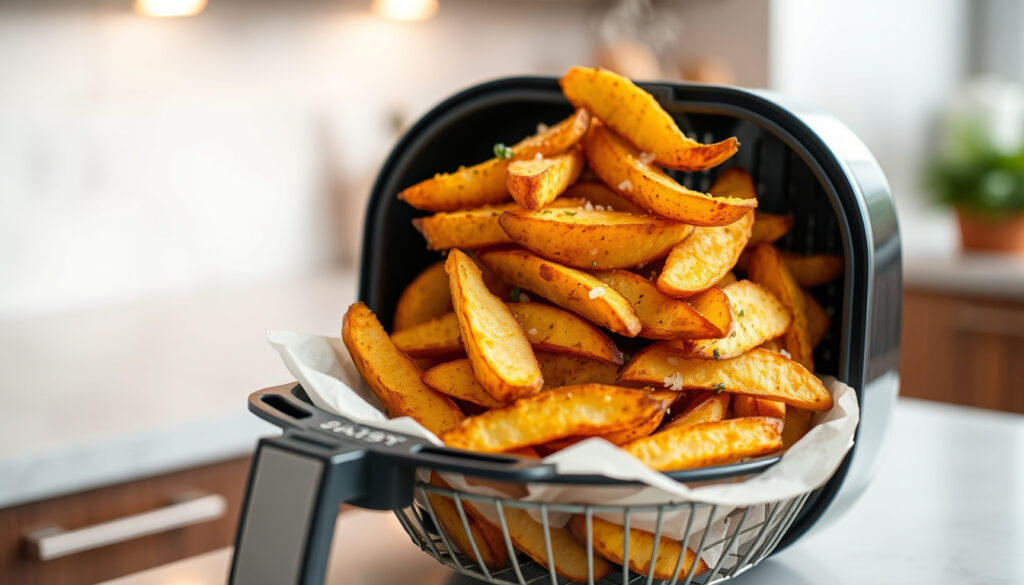
Air Fryer Potato Wedges – Crispy Recipe in 20 Minutes
Air fryer potato wedges have become a staple for anyone seeking restaurant-quality crispiness without the mess of deep frying. By circulating hot air around each wedge, these appliances deliver a golden exterior and fluffy interior in under 20 minutes, using a fraction of the oil required by traditional methods.
Whether you are preparing a weeknight side dish or hosting a game-day gathering, mastering air fryer potato wedges comes down to three fundamentals: consistent sizing, proper temperature, and deliberate seasoning. This guide covers every step from selecting the right potato to troubleshooting soggy results, drawing on tested techniques from multiple recipe developers.
How to Make Crispy Air Fryer Potato Wedges
Achieving genuinely crispy air fryer potato wedges begins before the appliance even turns on. The process starts with selecting a potato variety suited to the air fryer environment, then moves through cutting, seasoning, and cooking stages that each play a distinct role in the final texture.
Essential Timing and Temperature
Temperature and cook time vary depending on the type of potato used. Standard white or yellow potatoes such as Russet or Yukon Gold varieties cook at 400°F (200°C) for approximately 12 to 15 minutes. Sweet potato wedges require a slightly lower temperature of 375°F to 385°F (190°C to 196°C) and need 15 to 20 minutes to develop their characteristic caramelized edges.
- Russet or Yukon Gold wedges: 400°F (200°C), 12–15 minutes, shake basket at midpoint
- Sweet potato wedges: 375°F–385°F (190°C–196°C), 15–20 minutes, shake at midpoint
- Preheat the air fryer for 4–5 minutes before adding any food
- Flip or shake wedges exactly once during cooking to redistribute heat contact
- Add 1-minute increments if wedges have not yet reached desired crispness
How to Cut Potatoes for Air Fryer Wedges
Uniform sizing ranks among the most critical factors in this recipe. Wedges that vary significantly in thickness cook unevenly, leaving some pieces underdone while others burn. A standard approach involves cutting each potato lengthwise into quarters or sixths, depending on the potato’s diameter.
For four Yukon Gold potatoes, cut each into eight wedges to ensure consistent thickness across the batch. Sweet potatoes benefit from being split lengthwise first, then cut into uniform wedge shapes. Consistent sizing promotes even heat circulation and predictable crispness throughout the basket.
| Aspect | Details |
|---|---|
| Best Temperature | 400°F (200°C) for standard potatoes; 375°F–385°F (190°C–196°C) for sweet potatoes |
| Total Cook Time | 18–22 minutes including preheat |
| Oil Required | 1–2 tablespoons high-smoke-point oil |
| Optimal Potato Type | Russet or Yukon Gold for standard; Japanese or orange sweet potato for variation |
| Shake Interval | Once, at the halfway mark |
| Batch Size | Single layer; overlapping reduces crispiness |
Tips for Perfectly Crispy Air Fryer Potato Wedges
Even with correct temperature settings, several factors can undermine crispiness. The most common complaints center on wedges that emerge soft, steamed, or unevenly browned. Addressing these issues requires understanding the mechanics of how an air fryer cooks food and what conditions produce that desirable crunch.
Avoiding Sogginess
Soggy air fryer potato wedges almost always trace back to one of three causes: excess moisture on the potato surface, overlapping wedges in the basket, or insufficient preheating. Each of these creates a barrier that prevents the hot air from making direct contact with the potato’s exterior.
Soaking wedges in cold water briefly removes surface starch, but the potato must be thoroughly patted dry before seasoning and cooking. Any residual moisture immediately turns to steam during cooking, which softens the crust instead of crisping it. Drying with a clean kitchen towel or paper towel after soaking makes a measurable difference in the final texture.
Overcrowding the basket is the second most frequent mistake. While wedges may touch one another, they should not overlap. Overlapping pieces block air circulation, creating uneven cooking zones where some wedges steam in their own moisture while others brown correctly. Smaller air fryer baskets may require cooking in two separate batches rather than forcing everything into one layer.
The Single-Layer Rule
Basket-style air fryers rely on unobstructed air circulation to achieve crisp results. A single layer, with each wedge positioned separately, allows the heated air to contact every surface evenly. Recipes consistently emphasize this principle regardless of the potato type or seasoning used.
If the basket size limits the number of wedges that fit in a single layer, cook multiple batches rather than stacking pieces on top of each other. The additional cook time for a second batch produces far better results than attempting to rush a single overcrowded batch.
Best Ingredients and Seasonings for Air Fryer Wedges
The potato variety forms the foundation, but the oil and seasoning blend determine the final flavor profile. Both elements warrant deliberate selection to balance health considerations with maximum taste.
Choosing the Right Potato
Russet potatoes produce the crispiest wedges due to their high starch content and low moisture. The trade-off is a slightly drier interior texture. Yukon Gold potatoes offer a middle ground, delivering a creamier center while still developing a satisfying crunch on the outside. According to tested recipes, sweet potatoes can be substituted with Yukon Gold, Russet, or Japanese varieties depending on availability and preference.
- Russet: High starch, very crispy exterior, drier inside
- Yukon Gold: Medium starch, creamy interior, good crispness
- Sweet potato: Natural sweetness, nutrient-dense, softer texture with crisp edges
- Japanese sweet potato: Slightly nutty, holds shape well during cooking
Oils and Healthier Alternatives
High-smoke-point oils deliver the best results in an air fryer because they resist breaking down at the temperatures required for crispiness. Avocado oil, grapeseed oil, canola oil, refined olive oil, and coconut oil each perform well in this application. The quantity matters as much as the type: one to two tablespoons provides adequate coverage without excess calories.
Lightly misting wedges with cooking spray or skipping oil entirely produces a lower-calorie result, though the texture will be noticeably less crispy. Recipes emphasizing minimal oil compared to deep frying consistently highlight this trade-off. Those monitoring calorie intake can compare the impact by reviewing calories in chicken breast and other protein sides, which are often served alongside potato wedges.
Seasoning Blends
A simple seasoning of salt alone can produce satisfying results, but most recipes layer multiple spices to build depth. Common savory blends combine garlic powder, onion powder, paprika, sea salt, and black pepper, with optional additions like smoked paprika or nutritional yeast for extra complexity.
Sweet versions typically swap savory spices for cinnamon and coconut sugar. For an extra crispy coating on sweet potato wedges, some recipes call for tossing wedges in arrowroot powder or cornstarch before adding oil and seasonings. This light coating creates an additional crunch layer that holds up well during the air frying process.
All base recipes naturally accommodate both vegan and keto adaptations by using plant-based seasonings and either skipping oil or choosing low-carb seasoning blends. The flexibility makes this a versatile side dish across different dietary approaches.
Air Fryer Potato Wedge Variations
Beyond the standard savory preparation, air fryer potato wedges adapt to a wide range of flavor profiles and dietary needs. These variations draw on the same core technique while introducing new ingredients and flavor concepts.
Sweet Potato Wedges
Swapping standard potatoes for sweet potatoes shifts the flavor profile toward natural sweetness and adds nutritional benefits. Sweet potato wedges are rich in fiber and vitamins A and C, making them a healthier alternative to conventional white potato preparations.
The cooking temperature drops slightly to 375°F to 385°F (190°C to 196°C), and the total time extends to 15 to 20 minutes. Shaking the basket at the halfway point remains essential for even browning. Tossing with arrowroot powder or cornstarch before cooking enhances the crispy exterior significantly.
Frozen Wedges and No-Oil Approaches
Fresh-cut wedges consistently outperform frozen versions in terms of crispiness. Frozen potato wedges often contain excess surface moisture from the industrial blanching process, which interferes with browning in the air fryer. If using frozen wedges, extending the cooking time and ensuring they are spread in a single layer can partially compensate for this difference.
For those pursuing lower-calorie preparations, misting wedges with cooking spray or omitting oil entirely reduces fat content substantially. The trade-off appears primarily in texture rather than flavor, as the seasonings still caramelize effectively without the oil barrier.
Diet-Specific Adaptations
Keto-friendly versions rely on Russet potatoes or low-carb sweet potato alternatives, using minimal or no added oil and emphasizing savory spices over sweet ones. Vegan preparations require no ingredient changes, as the base recipe consists entirely of plant-based components. Both adaptations demonstrate how the foundational method accommodates different nutritional goals without abandoning the core technique.
Loaded wedge variations work well for game day or fall dinner occasions. Savory boosts like nutritional yeast, smoked paprika, cheese, or fresh herbs can be added during the final minutes of cooking. Sweet versions benefit from cinnamon and coconut sugar, though the crispy texture may be slightly softer when oil is reduced.
Air Fryer vs. Oven: Which Method Produces Better Wedges?
Air fryers excel at producing crispy results with less oil than conventional ovens, largely because they circulate hot air continuously rather than relying on static heat. Convection ovens can approximate similar results at comparable temperatures, though the cook time typically runs longer.
The basket-style design of most air fryers requires cooking in batches, which can extend total preparation time for larger servings. Oven baking, by contrast, accommodates a full batch in a single run. For smaller households or quick weeknight meals, the air fryer’s speed and efficiency often make it the preferred choice. Those interested in broader air fryer applications can find detailed potato wedge recipes and basic air fryer guidance from food safety and recipe sources.
The air fryer method consistently outperforms oven baking in two key areas: reduced cook time and superior crispness without excess oil. While both methods can produce enjoyable results, the air fryer delivers the textural qualities most people associate with restaurant-quality potato wedges.
Pro Tips: What Works vs. Common Mistakes
Effective air fryer technique depends on understanding why certain steps matter. Patting wedges dry after soaking removes moisture that would otherwise steam during cooking. A preheated air fryer ensures immediate searing rather than a gradual warm-up that softens the exterior. Flipping or shaking at the halfway point redistributes each wedge’s position in the basket for more even browning.
Overcrowding the basket ranks as the most consistently reported mistake in air fryer potato wedge preparation. Even when wedges are not stacked, touching and overlapping significantly reduces the airflow around each piece, leading to uneven cooking and a softer crust.
Expert Guidance and Reliable Sources
Recipe developers and food safety agencies offer complementary guidance on air fryer potato preparation. The United States Department of Agriculture provides foundational information on food and nutrition that contextualizes the health benefits of reduced-oil cooking methods. Safe food handling practices, including proper washing and storage of raw potatoes, remain important regardless of the cooking appliance used.
Air fryer-specific recipe collections offer detailed variations and troubleshooting guidance. Seasoning choices, cooking temperatures, and timing adjustments vary across sources, reflecting the flexibility of the technique rather than conflicting guidance. Testing a preferred approach over two to three preparations typically reveals the combination of settings and ingredients that works best for a specific appliance model and personal preference.
Summary
Air fryer potato wedges deliver a crispy, golden result in 15 to 20 minutes with minimal oil. Success hinges on uniform cutting, proper preheating, single-layer cooking, and strategic seasoning. Russet and Yukon Gold potatoes perform best for standard wedges, while sweet potatoes offer a nutrient-dense alternative. Variations span savory, sweet, keto, and vegan preparations, all built on the same core technique. Those exploring additional air fryer options may find Canada Grocery Rebate 2025 Eligibility relevant when planning grocery purchases for seasonal cooking projects.
Frequently Asked Questions
Are air fryer potato wedges healthy?
Air fryer potato wedges are healthier than deep-fried versions because they require significantly less oil. They retain the fiber and nutrients of whole potatoes while delivering a crispy texture without submerging the food in fat.
Can you cook frozen potato wedges in an air fryer?
Frozen potato wedges can be cooked in an air fryer, though fresh-cut wedges typically produce crispier results. Extending the cooking time and ensuring a single-layer arrangement helps compensate for excess surface moisture in frozen varieties.
How do you get air fryer potato wedges extra crispy?
Extra crispiness comes from patting wedges dry after soaking, coating them lightly with arrowroot powder or cornstarch, and ensuring the air fryer is preheated before cooking. Avoiding overcrowding and shaking the basket at the midpoint also contribute significantly.
What potatoes are best for air fryer wedges?
Russet potatoes produce the crispiest exterior due to their high starch content, while Yukon Gold potatoes offer a creamier interior with good crispness. Sweet potatoes provide a nutrient-dense alternative with natural sweetness.
How long do you cook potato wedges in an air fryer?
Standard potato wedges cook at 400°F (200°C) for 12 to 15 minutes. Sweet potato wedges cook at 375°F to 385°F (190°C to 196°C) for 15 to 20 minutes. Preheating the air fryer for 4 to 5 minutes before cooking adds to the total time.
Can you make air fryer potato wedges without oil?
Air fryer potato wedges can be prepared without oil by misting them with cooking spray or skipping the oil entirely. The result is lower in calories but less crispy in texture compared to versions cooked with one to two tablespoons of high-smoke-point oil.
Why are my air fryer potato wedges soggy?
Sogginess usually results from excess moisture on the potato surface, overcrowding the basket, or insufficient preheating. Patting wedges dry, arranging them in a single non-overlapping layer, and preheating the appliance address these issues directly.
What seasonings work best for air fryer potato wedges?
Garlic powder, onion powder, paprika, sea salt, and black pepper form a versatile base blend. Optional additions like smoked paprika, nutritional yeast, chili powder, or cinnamon expand the flavor profile for savory or sweet variations.
More related posts
 John Hurt: His Cause of Death, Irish Home, and Iconic Roles
 Eli Lilly Stock Price – Live Quote Charts Forecast
 Victoria Beckham: Biography, Health, and Net Worth
 Ben Stiller: Health, Wife, Nepo Baby, and Career Evolution
 Biggie Smalls: Life, Murder, and Unsolved Case
 Claire Danes: Biography, Children, Husband, and DiCaprio Feud
 Luke Hemsworth: Age, Height, Net Worth & Why He’s Forgotten
 Happy Mother’s Day 2025: When Is It in the US, UK, Ireland & More