Mount Robson Climbing Guide: Difficulty, Routes & Costs
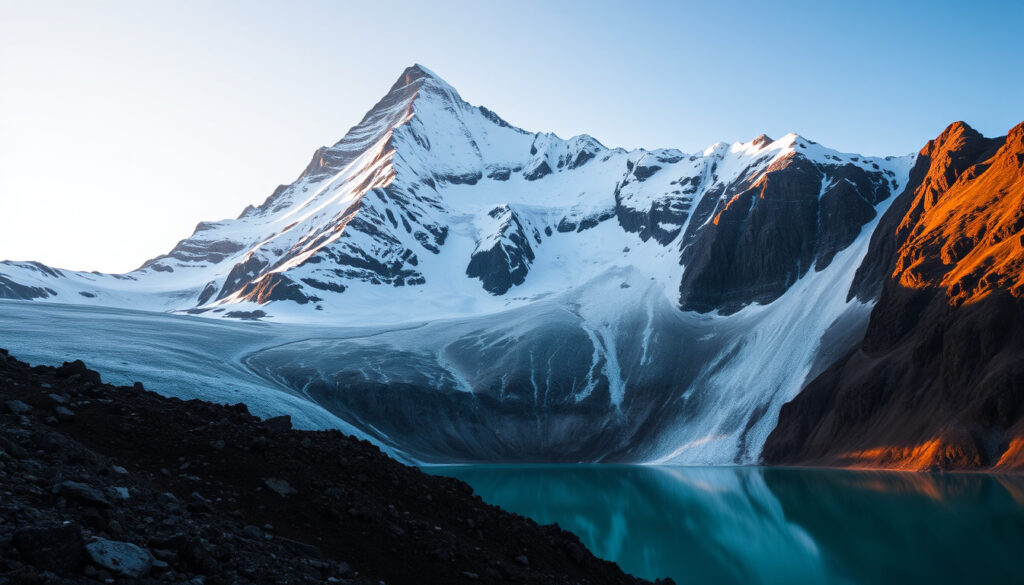
There’s a moment, just before you set foot on the Berg Lake Trail, when the sheer scale of Mount Robson hits you. This isn’t a mountain you casually bag on a weekend — it’s the highest peak in the Canadian Rockies at 3,954 m, a serious alpine objective that demands respect, planning, and a healthy dose of self-honesty.
Height: 3,954 m (12,972 ft) ·
Location: Mount Robson Provincial Park, British Columbia ·
First Ascent: 1913 by W. W. Foster, A. H. MacCarthy, and E. W. D. Holway ·
Climbing Difficulty: Class IV / 5.4 (Fuhrer Ridge) ·
Park Area: 2,250 km² (869 sq mi) ·
Annual Visitors: Over 500,000 (estimated)
Quick snapshot
- Remote location requires self-sufficiency (Global Summit Guide climbing route authority)
- Glacier travel and crevasse hazards (Yamnuska Mountain Adventures guiding service)
- Unpredictable alpine weather (Global Summit Guide climbing route authority)
- Fuhrer Ridge rated IV 5.4, suitable for experienced climbers (Global Summit Guide climbing route authority)
- Park entry: free (no gate) (BC Parks provincial park authority)
- Backcountry camping: $10-15/night/person (BC Parks provincial park authority)
- Climbing registration: voluntary, no fee (BC Parks provincial park authority)
- Guided ascent: $3,000-7,000 CAD (Yamnuska Mountain Adventures)
- Grizzly and black bears common (BC Parks provincial park authority)
- Bear spray required and available in Valemount (BC Parks provincial park authority)
- Food caches at all backcountry campgrounds (BC Parks provincial park authority)
- Maintain 100m distance from bears (BC Parks provincial park authority)
- 3-6 months advance booking recommended
- Permits available April 1 via BC Parks
- Best climbing season: July-August
- Weather window typical: 5-7 days
Nine critical data points, one pattern: Mount Robson’s challenge is less about one vertical wall and more about the total package of altitude, logistics, and remote conditions.
The numbers tell a clear story — 3,954 m of elevation with 2,800 m of vertical relief from the Berg Lake area, a technical route grade that filters out beginners, and a location that’s a 90-minute drive from the nearest services in Jasper.
| Specification | Value |
|---|---|
| Height (meters) | 3,954 m |
| Height (feet) | 12,972 ft |
| Province | British Columbia |
| Mountain Range | Canadian Rockies |
| First Ascent Date | 1913-07-31 |
| Climbing Route | Fuhrer Ridge (standard) |
| Route Grade | IV 5.4 |
| National Park | Mount Robson Provincial Park |
| Nearest Town | Valemount, BC |
Is Mount Robson hard to climb?
Short answer: yes, and in ways that surprise even experienced mountaineers. The standard route up Fuhrer Ridge is graded Alpine IV with a 5.4 rock step — that’s not the hardest technical grade in the world, but the context transforms it.
What is the technical difficulty of the Fuhrer Ridge route? (Class IV 5.4)
The Kain Face, which forms the crux of the standard route, involves steep snow and ice at 45-55 degrees with sections of exposed rock. Global Summit Guide climbing route authority describes it as a serious multi-day alpine objective, not a walk-up. Climbers must be comfortable with glacier travel, crevasse rescue techniques, and self-arrest on steep snow.
A 5.4 rock move on a boulder field at sea level is one thing. Doing it at 3,500 m after four days of carrying gear, with a pack, in alpine conditions — that is a different sport entirely. The grade understates the real challenge.
Most guided expeditions allocate 4 to 6 days for the climb, with Global Summit Guide climbing route authority reporting that successful Kain Face ascents typically take 3 to 4 climbing days plus a weather buffer. The mountain’s 2,800 m vertical relief from the Berg Lake trailhead means every altitude zone — forest, alpine, glacial — must be navigated.
How does Mount Robson compare to other Canadian Rockies climbs?
- Mount Robson (3,954 m) is the highest in the Canadian Rockies, but not the hardest technical climb in the range.
- Routes span approximately seven established lines across a wide difficulty spectrum, according to Global Summit Guide climbing route authority.
- Compared to peaks like Mount Alberta or Mount Temple, Robson’s main challenge is its remote location and weather volatility, not just the climbing grade.
The pattern: Mount Robson punishes poor planning more than it punishes weak climbing technique. Fit, self-sufficient parties who respect the weather tend to succeed.
How much does it cost to climb Mount Robson?
The total cost depends heavily on whether you go guided or independent, but the real surprise is how many separate fee buckets exist before you even touch rock.
What are the fees for climbing permits?
Here is where most planning guides get it wrong. BC Parks provincial park authority does not charge a climbing permit fee for Mount Robson itself — registration is voluntary. But the Berg Lake Trail backcountry camping is mandatory to book and costs approximately $10-15 per person, per night. BC Parks also charges a $5 fee for reservations made by phone.
What are the costs for guided ascents?
Guided climbs with established operators run from $3,000 to $7,000 CAD. Yamnuska Mountain Adventures guiding service quotes guide fees separately from client expenses, which can include transportation, camping and mountaineering gear rentals, park fees, meals for the guide, and helicopter flights if used. They require a 35% deposit once a date is confirmed and full payment 8 weeks before the climb. Summit Mountain Guides guiding operator includes park permits and liability insurance in their package.
Going independent saves thousands of dollars but shifts all logistics, gear, and decision-making onto you. A guided trip costs more but includes insurance, permits, and a professional who knows when to turn around — a judgment call that has saved lives on this mountain.
Independent climbers still need to budget for: park camping fees ($10-15/night), gear rental ($200-500 for full alpine kit), food for 5-7 days, and transportation to the trailhead. The BC Parks management plan records 8 active guided recreation permits in the park, confirming that the commercial climbing ecosystem is small but established.
Are there bears in Mount Robson Park?
Yes, and not just the kind you can scare off with a shout. Mount Robson Provincial Park is prime grizzly and black bear habitat, and sightings along the Berg Lake Trail are common throughout the climbing season.
What type of bears inhabit the area?
BC Parks provincial park authority confirms both grizzly bears and black bears are present. Bear safety protocols are mandatory, not optional:
- Carry bear spray and know how to deploy it — available for purchase in Valemount.
- Store all food, toiletries, and scented items in bear-proof food caches at backcountry campgrounds.
- Maintain a minimum 100 m distance from any bear you encounter.
- Travel in groups and make noise on trails, especially in dense vegetation and near streams.
The Berg Lake Trail cuts through avalanche paths and berry patches that bears actively forage in during late summer. August climbers face the highest encounter probability. A bear bell is not a substitute for spray and situational awareness.
The implication: bear safety is not an afterthought on this trip — it is as fundamental as your sleeping bag. Climbers who treat it as optional are the ones who end up in incident reports.
What is special about Mount Robson?
Mount Robson is not just tall — it is visually and geologically dramatic in a way that sets it apart from the 3,000+ other peaks in the Canadian Rockies.
Why is Mount Robson the highest peak in the Canadian Rockies?
At 3,954 m (12,972 ft), Mount Robson is the undisputed tallest peak in the Canadian Rockies — but it is not the tallest peak in Canada. That title belongs to Mount Logan at 5,959 m in the Yukon. What makes Robson stand out is its massive vertical relief: over 2,800 m from the Berg Lake area to the summit, a 9,200-foot rise that creates its own weather systems and delivers a visual impact that photographers and climbers describe as almost vertical when viewed from the Yellowhead Highway.
What makes Mount Robson Provincial Park unique?
The park itself is a UNESCO-recognized area spanning 2,250 km². The Berg Lake Trail, considered one of the world’s premier multi-day hikes, runs 23 km one-way through old-growth forests, waterfalls, and glacial landscapes to Berg Lake at the base of the mountain. BC Parks provincial park authority manages the park for both wilderness preservation and recreation, a balancing act that means campsites are limited and advance booking is essential.
What this means: Mount Robson’s fame is earned through a combination of height, relief, and accessibility — it is one of the few 3,900 m peaks you can drive to within sight of. But that accessibility fools people into underestimating the climb.
What city is Mount Robson in?
Mount Robson is not in a city — it is located in Mount Robson Provincial Park, British Columbia, about 30 km from the town of Valemount, BC, and 90 km from Jasper, Alberta.
How do I get to Mount Robson Provincial Park?
The park is accessible via Highway 16 (the Yellowhead Highway), which runs between Jasper and Prince George. The main trailhead for the Berg Lake Trail is at the Robson Meadows campground, clearly signed off the highway. The nearest full-service town is Valemount, where you can fuel up, buy bear spray, and arrange last-minute gear.
Mount Robson is visible from the highway on a clear day, yet its summit is a multi-day alpine climb away. The visual proximity tricks many hikers into thinking they can “just go up” — a mistake that has led to rescue calls. The Berg Lake Trail ends at the base. The summit starts where the trail ends.
What are the top 3 hardest mountains to climb?
Mount Robson is not in the global top 3 hardest mountains — those are typically K2, Annapurna, and Nanga Parbat, with their extreme altitudes, avalanche danger, and technical difficulty. But in the Canadian Rockies, Mount Robson ranks among the most challenging climbs due to glacier travel, weather unpredictability, and commitment requirements.
Is Mount Robson among the hardest mountains in the world?
No. The global hardest mountains are defined by altitude (above 8,000 m), extreme avalanche terrain, or a combination of both. Mount Robson at 3,954 m is a serious alpine objective but not in the same category as K2 (8,611 m) or Annapurna (8,091 m). Within Canada, it sits below Mount Logan (5,959 m) in height but exceeds many higher peaks in technical climbing difficulty per meter climbed.
The trade-off: Mount Robson’s difficulty is not about extreme altitude or thin air above 8,000 m — it is about the constant low-grade stress of remote, glaciated terrain in volatile weather. That is a different kind of hard, but no less dangerous.
Mount Robson Park is one of British Columbia’s most popular destinations — a place where the scale of the landscape humbles even the most experienced visitors.
— BC Parks official, park management authority
Recommended for experienced climbers only — not a beginner’s mountain. The approach alone filters out anyone not prepared for a serious expedition.
— Yamnuska Mountain Adventures guide, Canadian guiding service
Nearly 3,000 metres of vertical relief makes it a spectacle that’s impossible to ignore from the highway.
— Andrea Ference, outdoor travel journalist
Related reading: Mount Washington: Extreme Weather, Fatalities, and Visitor Guide
globalsummitguide.com, en.wikivoyage.org, ianwelsted.com, andreaference.com, truenorthbrief.com, rockclimbingrealms.com, nrs.objectstore.gov.bc.ca, mitoc-cag.mit.edu
Frequently asked questions
What is the best time of year to climb Mount Robson?
July and August offer the most stable weather windows and the least snow on routes. Most guided expeditions run between mid-July and late August. June tends to have more avalanche debris and wet snow, while September introduces shorter days and more frequent storms.
Do I need a guide to climb Mount Robson?
Technically, no — there is no legal requirement for a guide. But the BC Parks management plan notes 8 active guided recreation permits, and most successful ascents involve either a guide or an extremely experienced party. The mountain’s remote nature, glacier travel requirements, and weather volatility make a guide a wise investment for anyone lacking extensive alpine experience.
What gear is required for Mount Robson climbing?
Standard alpine climbing gear: crampons, ice axe, harness, helmet, glacier rope, crevasse rescue kit, mountaineering boots, layered clothing system (including waterproof outer layer), headlamp, stove, and tent rated for alpine conditions. Gear rental is available in Valemount and Jasper.
How long does it take to climb Mount Robson?
Most guided expeditions allocate 4 to 6 days total. Independent parties with strong fitness and good conditions can complete the climb in 3 to 5 days but should budget extra for weather delays.
Can I hike to the summit of Mount Robson without climbing gear?
No. The Berg Lake Trail is a hike reachable by fit pedestrians with no technical gear, but the summit requires glacier travel, ice climbing, and alpine route-finding skills. The summit route is not a hike — it is a mountaineering climb.
Is there cell phone reception on Mount Robson?
Limited to nonexistent beyond the Berg Lake area. The park’s remote location means no reliable cell service on the mountain itself. Satellite communicators (Garmin inReach, Zoleo) are strongly recommended for emergencies and check-ins.
What is the death rate on Mount Robson?
BC Parks does not publish a specific death rate for the mountain, but it is considered one of the more dangerous peaks in the Canadian Rockies due to crevasse falls, rockfall, and weather-related accidents. Fatalities are rare but occur every few years, usually involving climbers caught in storms or underestimating route conditions.
For anyone planning a Mount Robson climb, the choice is straightforward: treat it as a serious alpine expedition from day one, or do not go at all. Park your ego at the trailhead, book the Berg Lake campsite months ahead, and decide whether the cost of a guide buys peace of mind or a lesson in humility.
More related posts
 Saudi Pro League Stats – 2024/25 Standings Top Scorers Records
 Spencer Pratt: Biography, Politics, Net Worth & Mayoral Run
 Hole 2 My Goal – Meaning, Origin and Research Findings
 Holy Cross Funeral Home Obituaries – Thornhill Recent Listings
 Dean Martin: Cause of Death, Wives & Sinatra’s Absence
 Crazy Horse: Lakota Warrior, Band, and Mountain Memorial
 Lauren Kyle: Interior Designer and Wife of Connor McDavid
 When Are Taxes Due 2026 Canada? Key Deadlines & Dates