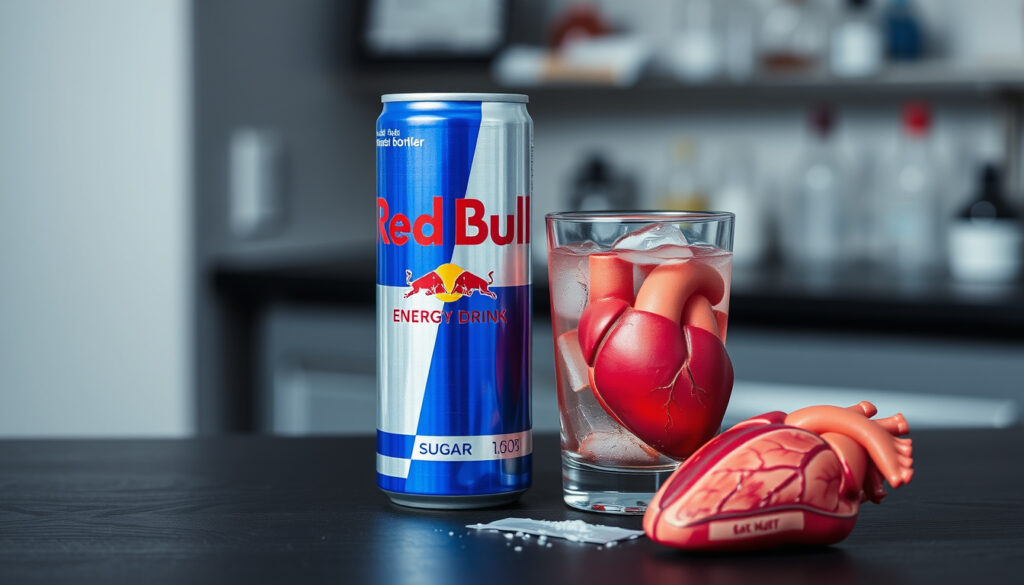
Red Bull: Ingredients, Health Effects, Myths & Facts
Anyone who’s cracked open a Red Bull during a late-night study session knows the instant jolt, but how much of what you’ve heard is actually true? This article fact-checks the ingredients, health effects, and myths surrounding the world’s most recognized energy drink.
Caffeine per 8.4 oz can: 80 mg ·
Sugar per 8.4 oz can: 27 g ·
Founded: 1987 ·
Annual revenue (2022): €9.4 billion ·
Global market share: 13% ·
Taurine per 8.4 oz can: 1,000 mg
Quick snapshot
- Contains 80 mg caffeine per 8.4 oz can (Red Bull)
- Taurine is synthetically produced, not from animals (Mayo Clinic)
- Non-alcoholic (0% ABV) – no alcohol in ingredients (PubMed Central)
- Launched in 1987 in Austria (Healthline)
- Long-term health effects of daily consumption remain understudied
- Exact marketing budget is not publicly disclosed
- Impact on athletic performance beyond short-term energy boost is debated
- 1987: First sold in Austria (PubMed Central)
- 1997: Entered the U.S. market (PubMed Central)
- 2012: Red Bull Stratos space jump (Harvard Health)
- Growing demand for sugar-free and zero versions
- Increased regulatory scrutiny on energy drink caffeine limits
- Expansion into new markets with localized formulations
Common myths about Red Bull
- Red Bull contains bull sperm – False. Taurine is synthetically produced (Mayo Clinic).
- Taurine is extracted from bull testicles – False. Commercial taurine is synthesized in labs (PMC).
- Red Bull can get you drunk – False. It contains 0% alcohol (Healthline).
- Red Bull contains dangerous levels of taurine – False. Taurine in energy drinks is considered safe in the U.S. (Mayo Clinic).
Key facts at a glance
Nine data points, one picture: Red Bull is a caffeine-and-taurine blend with a premium price and a tight nutritional profile.
| Attribute | Value |
|---|---|
| Founded | 1987 |
| Founder | Dietrich Mateschitz |
| Headquarters | Fuschl am See, Austria |
| Market share (global) | 13% |
| Caffeine per 8.4 oz can | 80 mg |
| Sugar per 8.4 oz can | 27 g |
| Annual revenue (2022) | €9.4 billion |
| Alcohol content | 0% (non-alcoholic) |
| Owner | Red Bull GmbH (privately held) |
The pattern: a single energy drink that has built a global empire on consistent branding and a simple ingredient formula.
What does Red Bull do for your body?
How does Red Bull boost energy?
- Caffeine (80 mg per 8.4 oz can) stimulates the central nervous system, improving concentration and alertness (PubMed Central).
- Taurine (1,000 mg per can) supports neurological development and cardiac contractility; it’s one of the most abundant amino acids in the brain, heart, and muscles (PubMed Central).
- B vitamins (niacin, pantothenic acid, B6, B12) help convert food into energy.
- Sugar (27 g per can) provides rapid energy but may cause a later crash.
The pattern: a three-pronged stimulant stack that hits quickly and fades within a couple of hours. For most people, that translates to a short burst of focus and physical energy.
Red Bull’s energy lift comes primarily from caffeine and sugar, not from the taurine or B vitamins. The latter play supporting roles, but don’t expect a jolt from them alone.
The implication: if you want a quick energy lift, you’re paying for the caffeine and sugar combination, not the exotic ingredients.
Is drinking Red Bull healthy for you?
Is it safe to drink one Red Bull a day?
- For most healthy adults, moderate consumption (one can per day) is generally safe (Mayo Clinic).
- Excess intake (multiple cans daily) is linked to heart palpitations, insomnia, and dental erosion due to sugar and acidity (PubMed Central).
- Combining with alcohol increases risks of overconsumption and adverse cardiovascular events.
What are the risks of energy drinks?
- Harvard Health warns that high sugar and caffeine levels contribute to emergency room visits, especially among young adults.
- A review of energy beverages found that when higher caffeine doses are combined with other ingredients like taurine, the net effect cannot always be predicted (PubMed Central).
The catch: “safe for most” does not mean risk-free. People with pre-existing heart conditions, pregnant women, and adolescents should be especially cautious with any energy drink, including Red Bull.
The pattern: one can is acceptable, but the margin between moderation and overconsumption is narrow for some groups.
Is Red Bull alcohol or not?
Does Red Bull contain bull sperm?
- No. Red Bull contains no bull sperm or any animal-derived ingredients. Taurine, the amino acid that sparked the myth, is produced synthetically in laboratories (Mayo Clinic).
- Red Bull is non-alcoholic (0% alcohol by volume). Its ingredient list (Red Bull) shows no ethanol or alcohol derivatives.
Is taurine made from bulls’ testicles?
- No. Commercial taurine is chemically synthesized, not extracted from animals (Mayo Clinic). The name “taurine” comes from Latin taurus (bull), but the compound was first isolated from ox bile, not testicles.
Can Red Bull get you drunk?
- No. High caffeine content may mimic stimulation but does not cause intoxication. Alcohol is absent from the formula.
The implication: the bull-sperm myth is one of the most persistent but completely false stories in the energy drink world. Taurine is vegan-friendly and synthesized in labs.
Why is Red Bull expensive?
What is the price of Red Bull?
- An 8.4 oz can typically costs $2–$3 in the U.S., significantly more than generic energy drinks or coffee.
How does Red Bull compare to other energy drinks in cost?
- Premium marketing and sponsorship strategy (e.g., Formula 1, extreme sports) drives brand perception.
- Unique packaging (slim, silver-and-blue can) and distribution add cost.
- Positioning as a premium product allows a higher per-unit price than store brands or even Monster.
You’re paying for the brand and the marketing machine, not for significantly different ingredients. A generic energy drink with similar caffeine and taurine might cost half as much.
The catch: Red Bull’s premium pricing is a marketing choice, not a reflection of superior ingredients.
What are the ingredients in Red Bull?
How much caffeine is in Red Bull?
- 80 mg per 8.4 oz (250 mL) can (Red Bull). That’s roughly the same as a standard cup of coffee.
Does Red Bull contain sugar?
- Regular Red Bull contains 27 g of sugar per 8.4 oz can (sucrose and glucose). Sugar-free and zero versions use artificial sweeteners (Healthline).
One nutrition spec, one pattern: Red Bull’s full ingredient list includes carbonated water, sucrose, glucose, citric acid, taurine, sodium bicarbonate, magnesium carbonate, caffeine, niacinamide, calcium pantothenate, pyridoxine HCl, and vitamin B12 (PubMed Central).
| Component | Amount per 8.4 oz |
|---|---|
| Caffeine | 80 mg |
| Taurine | 1,000 mg |
| Sugar (total) | 27 g |
| Calories | 110 |
| Niacin (B3) | 100% DV |
| Pantothenic acid (B5) | 50% DV |
| Vitamin B6 | 250% DV |
| Vitamin B12 | 80% DV |
The takeaway: the active ingredients are caffeine, sugar, and B vitamins – the rest are supporting players.
Are energy drinks bad for you?
What do health experts say about energy drinks?
- Harvard Health highlights that excessive consumption can lead to caffeine overdose, high sugar intake, and heart issues.
- A PubMed Central review found no reports of negative effects from taurine, ginseng, and guarana at typical levels (PubMed).
- However, the same literature warns that combining high caffeine with other stimulants may produce unpredictable cardiovascular effects (PubMed Central).
How does Red Bull compare to coffee?
- An 8 oz cup of coffee typically contains 80-100 mg caffeine – similar to Red Bull. The key difference: Red Bull adds sugar, taurine, and B vitamins.
- Coffee has antioxidants and no added sugar (if black), making it a less calorific choice.
“Moderation is safe” doesn’t mean “habit is harmless.” For adolescents, pregnant women, and those with anxiety or heart conditions, the risks are real. One can a day is the ceiling, not a goal.
Bottom line: Energy drinks like Red Bull can be safe in moderation, but consumers should weigh the sugar, caffeine, and cost against healthier alternatives like coffee or water.
Upsides
- Quick, reliable energy boost for short-term tasks
- Convenient, widely available packaging
- Sugar-free options available
- Synthetically produced taurine is vegan-friendly
Downsides
- High sugar content (27 g per can) – contributes to weight gain and tooth decay
- Caffeine may cause jitters, insomnia, and dependency
- Expensive compared to coffee or store brands
- Long-term health effects of daily use remain under-researched
“Red Bull contains 80 mg of caffeine per 8.4 oz can, roughly equivalent to a cup of coffee.”
Red Bull official product page
“Excessive consumption of energy drinks has been linked to emergency room visits, especially among young adults.”
Harvard Health Publishing
“Taurine, in certain amounts, is a safe drink ingredient in the United States.”
Mayo Clinic
For most healthy adults, the occasional Red Bull is unlikely to cause harm. But the brand’s marketing savvy has turned a simple stimulant drink into a premium lifestyle product. The choice: pay for the wings, or get the lift from a cheaper source. For budget-conscious consumers in the U.S., the smart move is clear: treat Red Bull as an occasional treat, not a daily habit, and opt for sugar-free or coffee on regular days.
Related reading: Bar Stool Buying Guide Ireland · Gift Baskets Ireland: Best Ideas, Where to Buy & How to Choose
pmc.ncbi.nlm.nih.gov, medicinenet.com, pmc.ncbi.nlm.nih.gov, escholarship.org, en.wikipedia.org
Frequently asked questions
Does Red Bull have more caffeine than coffee?
No. An 8.4 oz Red Bull has 80 mg caffeine, while an 8 oz cup of coffee typically has 80–100 mg. Coffee with a double shot can have up to 150 mg.
Can Red Bull cause dehydration?
Caffeine has a mild diuretic effect, but in moderate amounts (one can) the fluid volume offsets it. Dehydration is unlikely unless consumed in excess or during intense exercise without water.
Is Red Bull vegan?
Yes. All ingredients are plant-based or synthetic. Taurine is lab-made, not animal-derived. Red Bull’s official site confirms no animal products in the drink.
Does Red Bull expire?
Yes. The best-before date is printed on the bottom of the can. Consuming after that date may result in flat taste and reduced carbonation but is not typically dangerous.
What is the difference between Red Bull and Monster?
Monster has slightly more caffeine (160 mg per 16 oz can vs 80 mg per 8.4 oz) and a larger serving size. Both contain taurine, B vitamins, and sugar. Red Bull is generally more expensive per ounce.
Can you drink Red Bull while pregnant?
Health authorities, including the American College of Obstetricians and Gynecologists, recommend limiting caffeine to under 200 mg daily during pregnancy. One Red Bull (80 mg) fits within that guideline, but sugar and other ingredients should also be considered.
Does Red Bull help with hangovers?
No. The caffeine may temporarily mask fatigue, but alcohol and dehydration are not cured by an energy drink. In fact, combining the two can prolong dehydration and mask intoxication.
More related posts
 Jeffrey Dean Morgan: Age, Family, Height, and Facts – Biography
 Luke Hemsworth: Age, Height, Net Worth & Why He’s Forgotten
 Memory of a Killer: Episodes, Cast, Where to Watch
 Canelo Álvarez: Record, Losses, Kids, Net Worth & Next Fight 2026
 GTA SA: Complete Guide to Grand Theft Auto: San Andreas
 Mel Gibson: Health, Marriages, and Reputation Timeline
 Tennis Matches Today Live – Schedule, Scores and Streaming
 Miguel Mora: Black Phone Actor and Biography